
Holiday Screen-Time Survival Guide: Keeping Kids Balanced During Festive Breaks
Holidays are a time to connect, not argue over screens. Festive breaks should be warm, cosy and full of family memories.
For many parents, however, holidays can turn into endless screen marathons with gaming, TikTok scrolling and YouTube binges. Bedtimes slip, routines disappear and technology becomes the default babysitter.
The good news is you can protect your child’s mental health, keep screen time in check and create meaningful family moments without constant arguments.
Why Holidays Trigger Screen Overload
When school is out, natural limits on screen time vanish. Children crave stimulation, and parents often need a breather. Digital platforms are designed to keep kids engaged with streaks, rewards and instant dopamine hits.
At home, this can look like late-night gaming, mood swings when devices are removed, resistance to family plans and sibling fights over shared devices. It is not a battle with your child but a navigation of technology designed to hold their attention. Keeping this perspective helps maintain calm and solution-focused conversations.
Five Practical Holiday Strategies That Work
1. Set a Holiday Rhythm Not a Strict Schedule
Rigid schedules often backfire. Predictable rhythms give children a sense of safety and reduce pushback.
- Morning can include movement and sunlight such as walking, biking or a dance party.
- Midday can focus on creative activities like baking, crafts or puzzles.
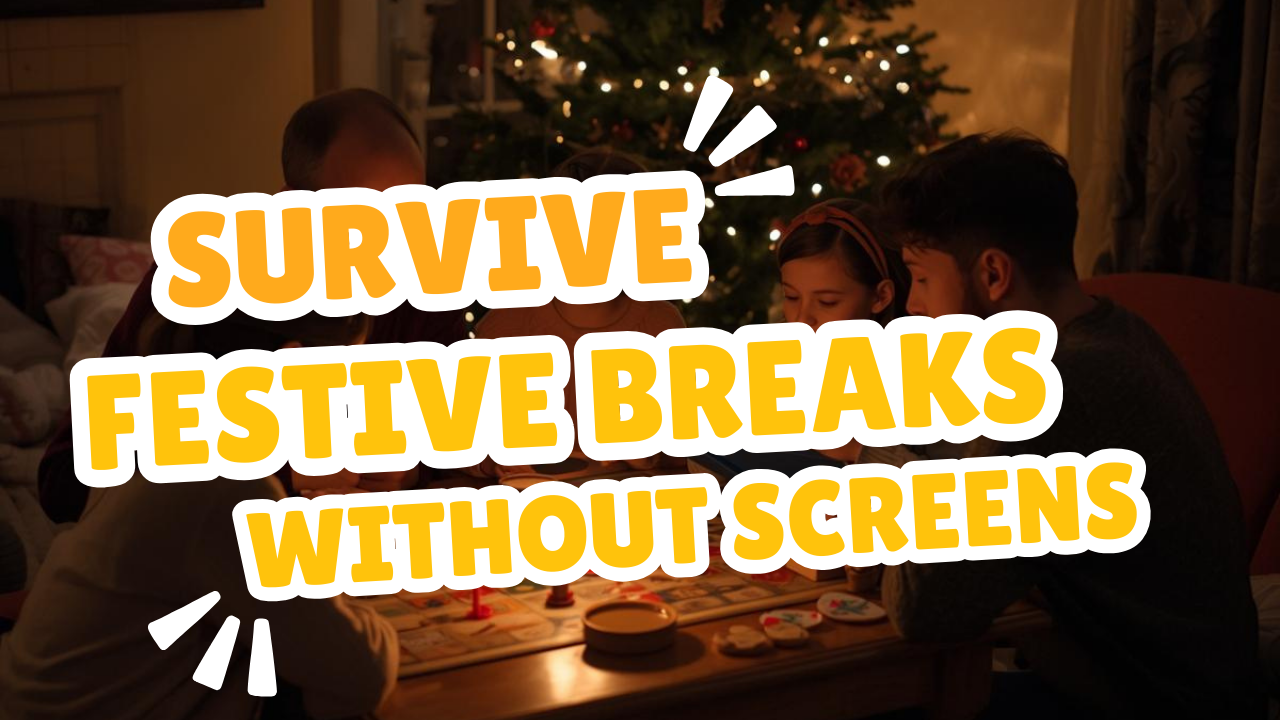
- Afternoon can be a pre-agreed screen time window, and evenings reserved for tech-free meals and family rituals like board games or storytelling.
Posting the rhythm on the fridge helps children see what is next and cooperate more easily.
2. Make Screen Time a Privilege
Shift from unlimited access to earned screen time using a simple token system. Two tokens for outdoor play and one for helping set the table can equal fifteen minutes of screen time. This approach makes screen time fair, predictable and teaches self-regulation without power struggles.
3. Create Compelling Tech-Free Alternatives
Children cannot be expected to entertain themselves without support. Offer options that rival digital fun.
A holiday maker table with cardboard and markers, cook and create activities, neighbourhood scavenger hunts, a cosy reading corner or family tournaments with cards and games all work well. Naming the activity and adding small rewards such as stickers or choosing movie night makes it more engaging.
4. Use Screen Windows and Firm Boundaries
Set clear windows for screen use and protect meals, sleep and family events. No screens during meals, no screens sixty minutes before bed, screens only in shared spaces and device-free family events all support healthy habits. Consistency is kinder than daily debates.
5. Co-Create a Festive Tech Agreement
Children cooperate better when they help set rules. Together, define approved apps and games, daily screen time limits, where screens are allowed and consequences for breaking rules. Signing the agreement turns boundaries into a family promise rather than just a parental rule.
By using these strategies, you can create a calm, connected and screen-balanced holiday. Small, consistent steps make a big difference in helping children enjoy the festive season without technology taking over.