
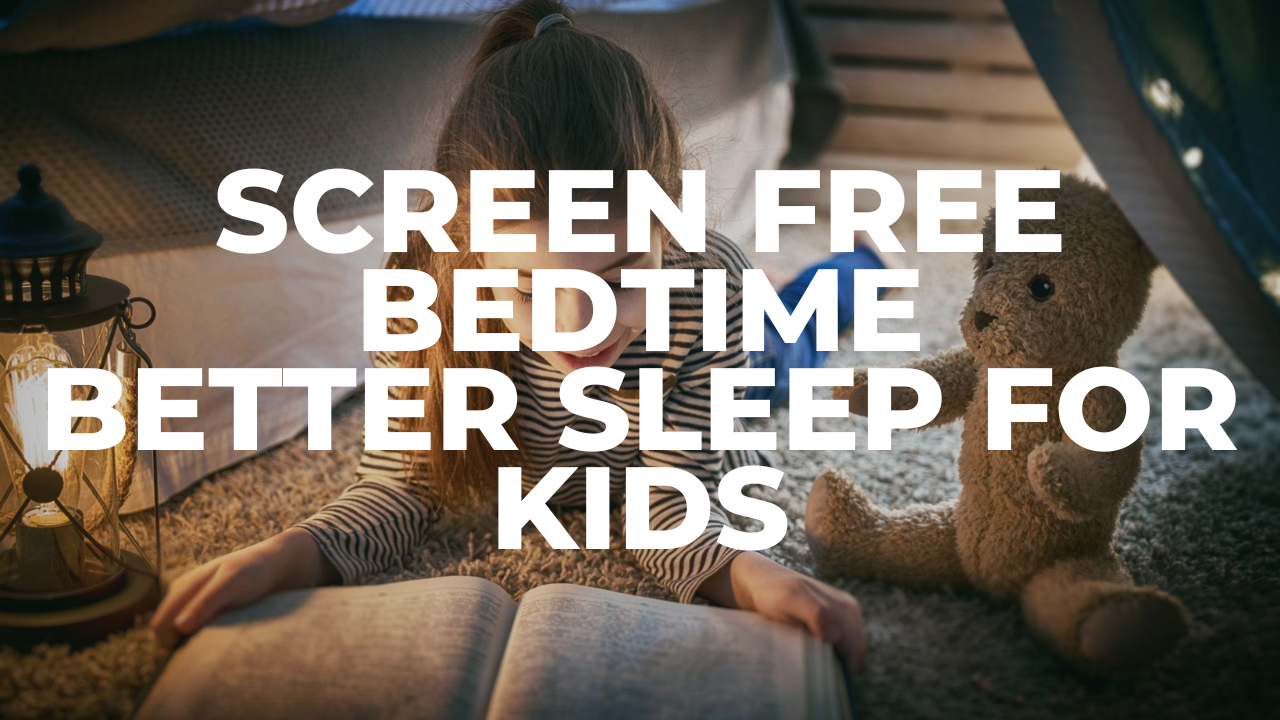
How to Create a Screen Free Bedtime Routine for Better Sleep in Kids
How to Create a Screen Free Bedtime Routine for Better Sleep in Kids
Does your child struggle to fall asleep at night? Do evenings often turn into negotiations over just a few more minutes of screen time?
This is becoming more common in today’s digital world, where screens are now part of almost every part of a child’s day, including the most important part for rest and recovery.
The challenge is not just behaviour. It is what screens are doing to the brain before sleeping.
The good news is that a consistent screen free bedtime routine can significantly improve how quickly children fall asleep, how deeply they rest, and how they feel the next day.
Why screens affect sleep more than we think
Screens impact sleep in two main ways.
The first is light exposure. Devices emit blue light that signals to the brain that it is still daytime. This reduces melatonin, the hormone responsible for sleep, and delays natural tiredness.
The second is mental stimulation. Videos, games, and fast paced content keep the brain active and alert when it should be slowing down. So even if the body feels tired, the mind is still engaged.
Over time, this can lead to children taking longer to fall asleep and getting lower quality rest.
How much sleep children need
Most children are not getting enough sleep for their age.
Younger children need more than many parents expect, and even small reductions in sleep can affect mood, focus, and behaviour the next day.
When sleep is reduced consistently, it often shows up as irritability, lower attention span, and emotional sensitivity.
One of the most common contributing factors is evening screen use.
Building a simple screen free bedtime routine
A good bedtime routine does not need to be complicated. It just needs to be consistent.
The most effective routines follow one simple principle. The brain needs time to shift from stimulation to rest.
A helpful starting point is setting a screen cutoff time about one hour before bed. This allows the nervous system to naturally settle without pressure or stimulation.
From there, the focus should be on repetition rather than variation. The same steps every night help signal safety and predictability to the brain.
A calm sequence might include tidying up, a warm shower, brushing teeth, quiet activities like drawing or puzzles, then reading or a short calming conversation before sleep.
It is not about the exact order. It is about consistency.
What to replace screens with
One of the biggest challenges for parents is not removing screens but replacing them with something that works.
Younger children respond well to storytelling, books, and simple creative play.
Older children benefit from reading, journaling, drawing, or calm independent activities.
Teenagers often respond well to reading, writing, stretching, or listening to calm audio.
The key is not forcing boredom but shifting from stimulation to calm engagement.
Why reading makes such a difference
Reading is one of the most effective screen free bedtime activities.
It naturally slows the nervous system, supports emotional regulation, and helps the brain transition into sleep mode.
It also creates a moment of connection between parent and child, which adds emotional safety to the routine.
Even a short reading habit can make a noticeable difference over time.
What to expect when changing habits
It is normal for children to resist change at first. Screens are highly engaging, so switching off can feel uncomfortable in the beginning.
Consistency matters more than negotiation.
Over time, the body adjusts faster than behaviour does. Once the routine becomes familiar, resistance usually decreases.
Creating a screen free bedtime routine is not about restriction. It is about helping the brain return to a natural rhythm that supports rest.
Start small. One change is enough to begin with.
Because when sleep improves, everything improves. Mood, focus, learning, and emotional balance all start to shift.
And the habits built at night often shape wellbeing far beyond bedtime.