
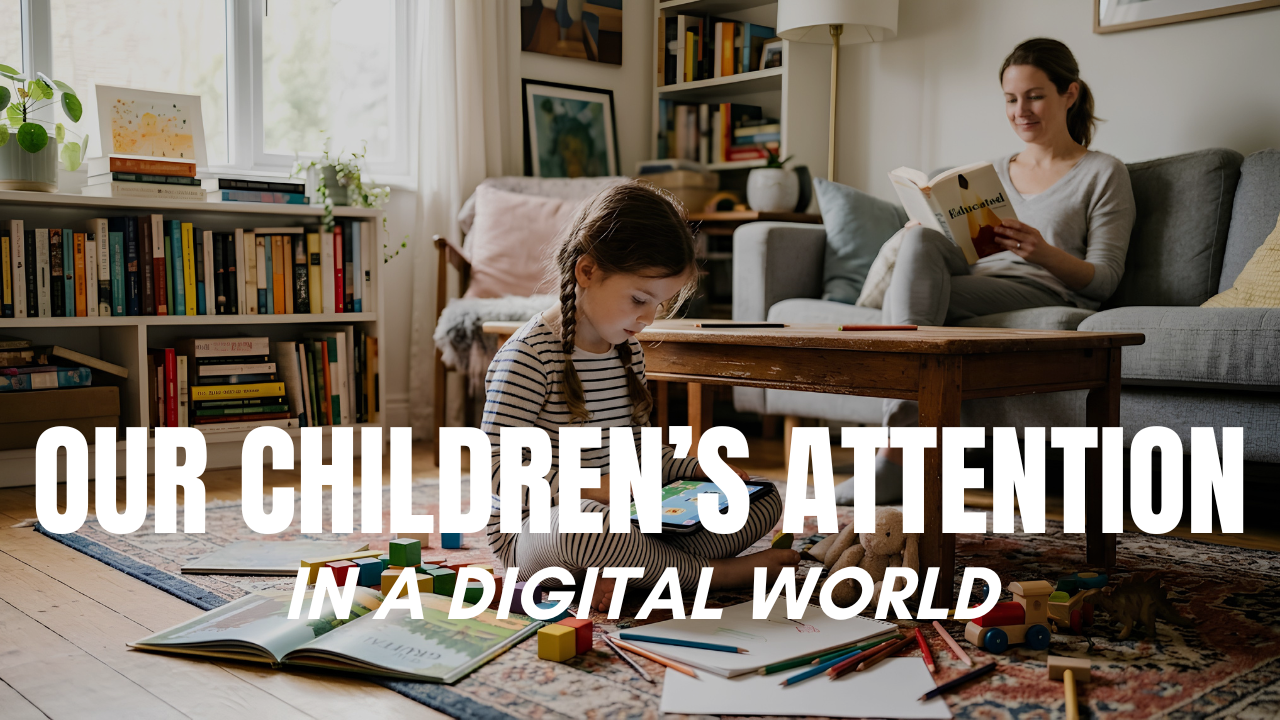
What Is the Digital World Teaching Our Children About Attention?
Children are growing up in a world where digital technology is part of everyday life.
Videos, games, messages, and online learning can all have a place on a child’s day. Technology can support learning, creativity, and connection, while also changing how children experience information and entertainment.
So, what is the digital world teaching our children attention?
The answer is more complicated than saying technology is simply good or bad. What matters is how technology fits alongside everything else children experience.
Why Does Attention Matter for Children?
Attention helps children listen, learn, communicate, and stay engaged with activities.
Children practise these skills through everyday experiences such as reading, playing, creating, having conversations and working through challenges.
Digital activities can involve different types of attention. A child might spend time researching a topic or creating something online, while other content may encourage them to move quickly from one thing to another.
Looking at the overall mix of experiences can be more useful than focusing on technology alone.
How Can Digital Experiences Influence Attention?
Much digital content is designed to capture attention. Videos can change quickly, games respond immediately, and notifications can draw our focus elsewhere.
This can create a highly stimulating experience and may encourage frequent shifts in attention.
That does not mean every digital activity affects children in the same way. The type of content, how it is used, and what else is happening during the day all matter.
A useful question for parents is:
What is my child doing with technology, and what experiences are happening alongside it?
What Role Does Boredom Play?
When entertainment is always available, it can be easy to fill every quiet moment.
Yet boredom can also give children space to decide what to do next. They might draw, build, explore, play, or come up with their own ideas.
Parents do not need to turn boredom into a lesson. Sometimes, allowing children a little space to figure out what comes next can be valuable.
How Can Parents Create Space for Different Types of Attention?
There is no perfect routine for every family.
Instead, parents can look at the bigger picture. Is there time for reading, creative play, physical activity, family conversations, outdoor experiences, quiet time, and digital activities?
The aim is not to remove technology. It is to give children opportunities to experience different ways of engaging with the world.
It is also worth looking at our own habits.
Children see how adults respond to phones, notifications, and distractions. Putting a phone aside during a conversation or creating moments to focus on one activity can model that attention is something we can choose where to place.
What Are We Preparing Children For in a Digital World?
Technology will continue to change, so children will need digital skills.
They will also need patience, curiosity, concentration, and the ability to stay engaged when something takes time.
Learning how to use technology is one part of growing up in a digital world. Learning when to put it aside can be valuable too.
What Can Parents Take Away From This?
Conversations about children and technology often focus on screen time and rules.
Those things can have their place. Another useful question is:
What experiences are we giving children opportunities to have?
Technology can be part of childhood. So can books, creativity, outdoor play, friendships, family conversations and quiet moments.
The goal is to help children understand that their attention is valuable and give them opportunities to practise choosing where it goes.
In a world full of things competing for attention, that is a skill worth developing.