
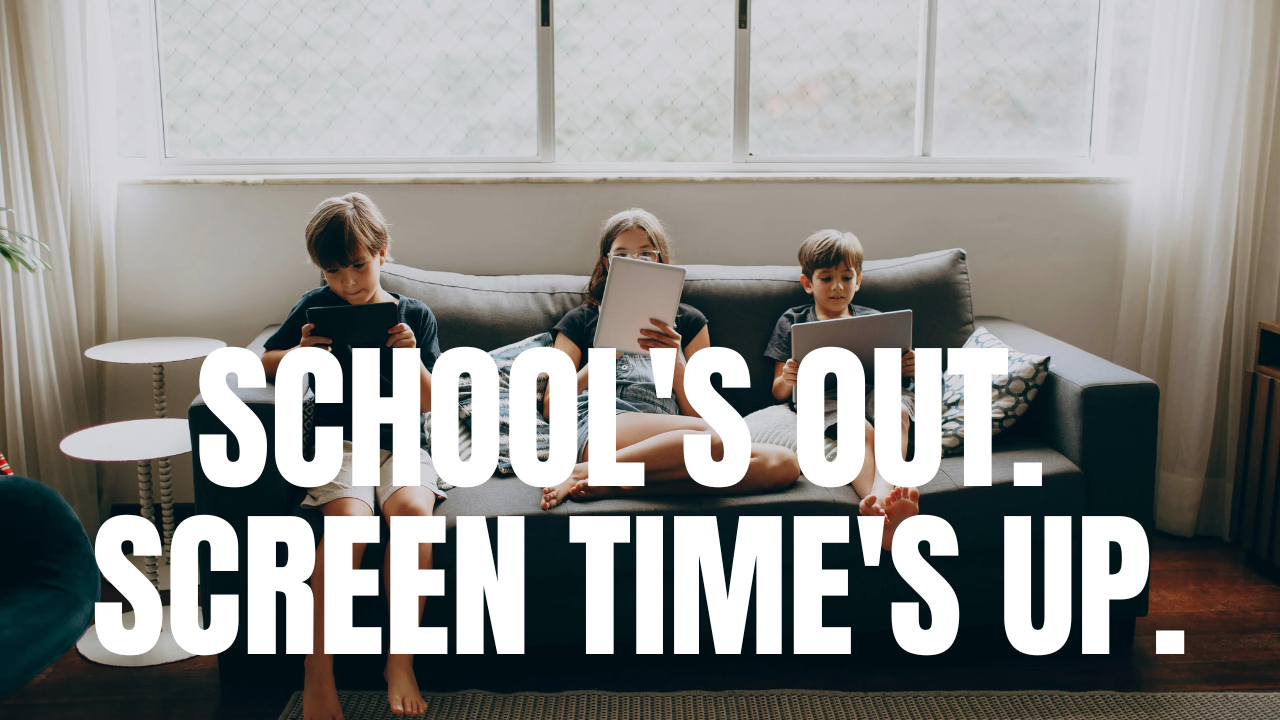
Why Does Screen Time Change So Much During School Holidays?
Many parents know the feeling. The school term is going well, routines are being held, and then the holidays arrive. Before long, the screen time habits that felt manageable during term can start to look very different.
It is rare because anyone has done something wrong. More often, it is because the structure that was quietly supporting those habits disappears the moment school finishes.
Why do screen time habits shift so quickly once the holidays start?
During the school term, screen time has natural boundaries around it. There is school, homework, sport, family commitments, and bedtimes shaped by the next morning's routine.
When the holidays begin, many of those boundaries disappear at the same time. There is often more free time, fewer fixed commitments, and less urgency around daily schedules. Within a few days, what used to be limited to certain times of the day can gradually expand into larger blocks of screen time.
Nobody necessarily plans that to happen. It is often a natural result of having fewer structures in place to shape the day.
Why do parents often need more support during the holidays?
School holidays do not only change a child's routine. They can also change their parent's day.
Many parents are still working, managing family responsibilities, running a household, and trying to balance everything that comes with everyday life. At the same time, the daily structure that school naturally provides is temporarily gone.
In that environment, screens can become a practical way to create some breathing space while other responsibilities are managed. There is no judgement in that. It is a reality many families experience.
The challenge is that what starts as a short-term solution can gradually become part of the holiday routine. By the time school returns, those habits may feel very different from the ones that existed only a few weeks earlier.
How do small changes end up making such a big difference?
The shift is usually gradual rather than dramatic.
It might be one more episode because the weather keeps everyone indoors. It could be extra gaming time during a quiet afternoon or a tablet that stays out longer than usual while parents finish work or manage other commitments.
Over time, those small decisions add up.
When school returns, some parents notice their child is more frustrated when screen time comes to an end or less enthusiastic about returning to previous boundaries. The change rarely happens overnight. It often develops slowly through the accumulation of small daily habits.
Is the goal of removing screens completely over the holidays?
For most families, removing screens completely is unlikely to be realistic or sustainable.
School holidays are meant to provide a break for both children and parents, and technology is now a normal part of everyday life. Rather than focusing on removing screens altogether, it can be more helpful to maintain a few consistent anchors throughout the day.
That might mean having breakfast together before devices are switched on, planning an outdoor activity after lunch, or creating a technology free period before dinner.
The specific activity matters less than the consistency. Small routines can provide structure and help create balance, even when the rest of the holiday schedule is more relaxed.
Where is a practical place for parents to begin?
A good starting point is understanding where things currently sit.
The Digital Daze Quiz provides parents with an opportunity to better understand their child's relationship with technology and screen use.
Take the Digital Daze Quiz: https://www.digitaldaze.com.au/quiz
For families looking for practical strategies and everyday tools, the Digital Daze book offers a step-by-step guide to creating healthier technology habits at home.
Get the Book: https://pay.digitaldaze.com.au/b/7sY14p5OTfSH1ideU79bO03