
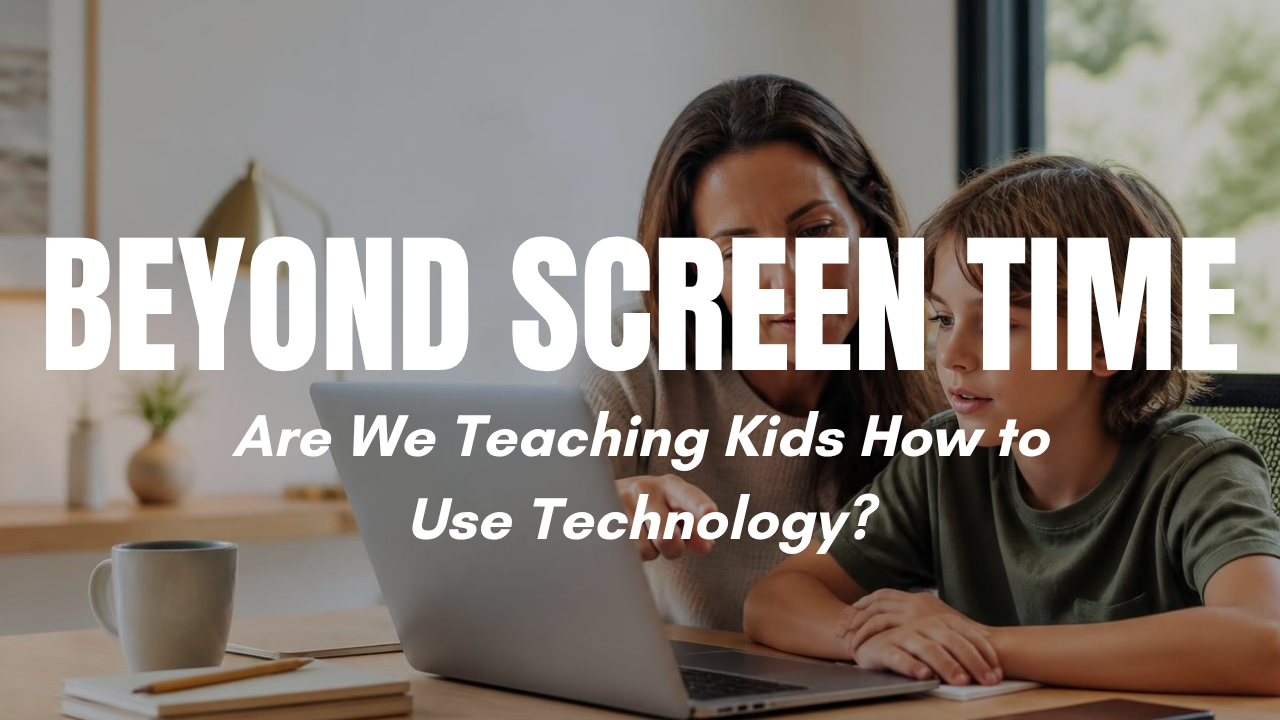
Are We Teaching Kids How to Use Technology, or Just Limiting It?
“Get off your phone.”
“You’ve had enough screen time.”
“Put it away. It’s bedtime.”
Most parents have said some versions of these words. Setting boundaries around technology has become part of everyday parenting, and those boundaries have their place.
Yet there is another question worth asking: Are we teaching children how to use technology well, or are we mainly teaching them when they are allowed to use it?
Technology is already part of everyday life. Children use it to learn, communicate, play, create, search for information, and increasingly interact with AI. The challenge is no longer simply deciding how much technology children should use. It is helping them develop judgement to use it wisely.
Why Is Digital Judgement Important for Children?
A child may know they have one hour of screen time yet still have no idea why an app keeps encouraging them to stay longer.
They may know to be careful online yet struggle to recognise whether something they see is trustworthy. They may understand that they should protect their personal information yet still share something without thinking about where it could end up.
These are bigger issues than screen time. They are about learning how to navigate a digital world.
As children become more independent, parents cannot monitor every screen, app or conversation. Gradually, children need to develop the ability to make good decisions for themselves.
That is where digital judgement matters.
What Can Parents Teach Beyond Screen Time Limits?
Screen time limits can help children develop healthier routines. Yet limits alone cannot teach children how technology works or why certain digital behaviours matter.
Children also need conversations that encourage them to think.
Instead of only saying, “You’ve been on your phone too long,” try asking, “How do you feel after spending that much time on it?”
Instead of saying, “You can’t use that app,” ask, “What do you think that app wants you to do?”
Instead of saying, “Don’t believe everything you see online,” ask, “What makes you think this is true?”
These questions help develop something a screen time limit cannot provide judgement.
How Does Technology Influence a Child’s Attention?
A child might open an app intending to watch one video and find themselves still scrolling much later. Notifications, recommendations, and endless feeds can make it easy to continue without thinking about why.
Parents can help children become more aware of this by asking simple questions:
Why do you think the app keeps showing you another video?
What makes you want to keep scrolling?
How do you feel when you finally put the phone down?
These conversations help children notice what technology is doing to their attention. Over time, that awareness can help them learn to manage technology rather than simply being managed by it.
Why Does Artificial Intelligence Make This Conversation More Important?
AI has added another layer to the conversation.
Children can use AI to learn, explore ideas, and create. At the same time, an AI response can sound convincing without necessarily being accurate.
Children need to understand that an AI response is not automatically a fact. They need to know when to question an answer, check information, protect their personal details, and recognise when something should be discussed with a trusted adult.
That is more than knowing how to use AI.
It is knowing how to think while using it.
How Can Parents Start the Conversation?
Start with curiosity rather than fear.
Ask your child what they enjoy doing online, what they are learning and what they find confusing. Ask what they have seen that made them uncomfortable.
You do not need to understand every app or platform they use. You simply need to be willing to enter their digital world with them.
The conversation does not have to be a lecture. Sometimes a simple question can open the door to a much more meaningful conversation than another warning about screen time.
What Should Children Ultimately Learn About Technology?
The goal is not to raise children who are afraid of technology. Technology can help children learn, create, communicate, and explore ideas in ways previous generations never experienced.
The goal is to raise children who understand it and can recognise when technology is helping them and when it is starting to take control of their attention, choices, or behaviour.
Because eventually, parents will not be there to set every limit. Children will have to make many of these decisions for themselves.
The question is not only how much technology your child uses. It is whether they are learning how to use it wisely.