
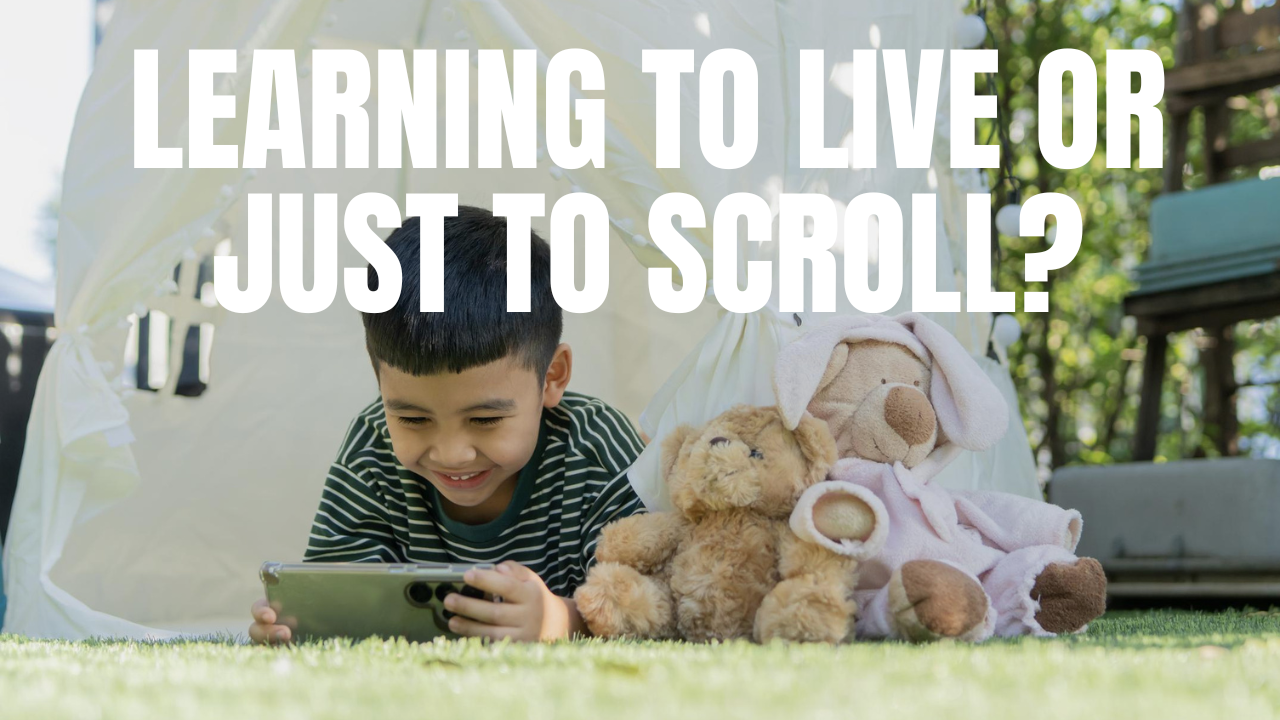
Is Your Child Learning to Live, or Just Learning to Scroll?
“I'm bored.”
Five words almost every parent has heard.
Today, there is usually a very quick solution. A phone. A tablet. YouTube. A game. Something that fills the silence within seconds.
Technology has brought incredible opportunities into childhood. Children can learn, create, communicate, explore new interests, and stay connected with friends from almost anywhere. The challenge comes when digital stimulation fills every quiet moment.
That raises an important question for parents:
Is your child learning how to live in the real world, or becoming highly skilled at navigating the digital one?
What Happens When Every Quiet Moment Has Something Filling It?
Think about ordinary moments on a child's day. Waiting in the car. Sitting at a restaurant. Waiting for dinner. Traveling somewhere. Sitting at home with nothing planned.
These moments can create opportunities for children to look around, ask questions, make up games, draw, read, talk, or simply use their imagination. Today, a screen can fill that space almost instantly.
Children develop patience, imagination, concentration, emotional regulation, and independence through everyday experiences. Waiting builds patience. Making up a game develops creativity. Losing teaches children how to handle disappointment. Real conversations develop communication. Working through a difficult task builds confidence and independence.
These skills grow through everyday life, including the moments when children must find their own way through boredom.
What Is the Screen Replacing?
Screen time totals only tell part of the story.
The more useful question goes deeper:
What is the screen replacing?
Is it replacing outdoor play, family conversation, reading, creativity, sleep, movement, imagination or time spent simply thinking?
That question takes the conversation beyond the number of minutes spent on a device. It looks at what children are actually missing while the screen holds their attention.
Why Childhood Needs Unstructured Space
Some of the most valuable childhood experiences look completely ordinary.
Playing outside until dinner. Building something and watching it fall apart. Making up games with friends. Reading because the afternoon feels long. Talking during a car ride. Help prepare dinner. Getting frustrated with something and finding a way through it. Sitting with boredom until an idea arrives.
These experiences help children discover who they are and how they respond to the world around them.
They learn how to manage frustration, solve problems, keep trying, communicate with others, and create something from their own imagination. They also discover that enjoyment can come from creating and participating, rather than simply consuming.
Those lessons become part of the foundation they carry into adulthood.
Where Does Technology Fit into a Healthy Childhood?
Technology is part of modern childhood and will continue to play an important role in education, communication, creativity, and entertainment.
The opportunity for parents is to help children develop a healthy relationship with them.
A device can be a useful tool while still having a defined place within a much bigger life. Family meals can create space for conversation. Outdoor activities can create movement and connection. Reading can strengthen concentration. Hobbies can develop creativity. Time with friends can build social confidence. Quiet moments can give children room to think.
And sometimes, when a child says, “I'm bored,” the best response may simply be to give them the space to discover what comes next.
What Is the Bigger Question for Parents?
The digital world will continue to evolve. Children will grow up surrounded by technologies previous generations could never have imagined.
The most important preparation has far more to do with helping children develop qualities that remain valuable in every generation: resilience, self-control, curiosity, creativity, concentration, communication and the ability to build meaningful relationships.
So, the real question is bigger than screen time:
Are children getting enough opportunities to learn how to live offline?
The goal is far greater than raising children who know how to use technology.
The goal is to raise children who know how to use technology while still knowing how to live, connect, think, and grow without it.