
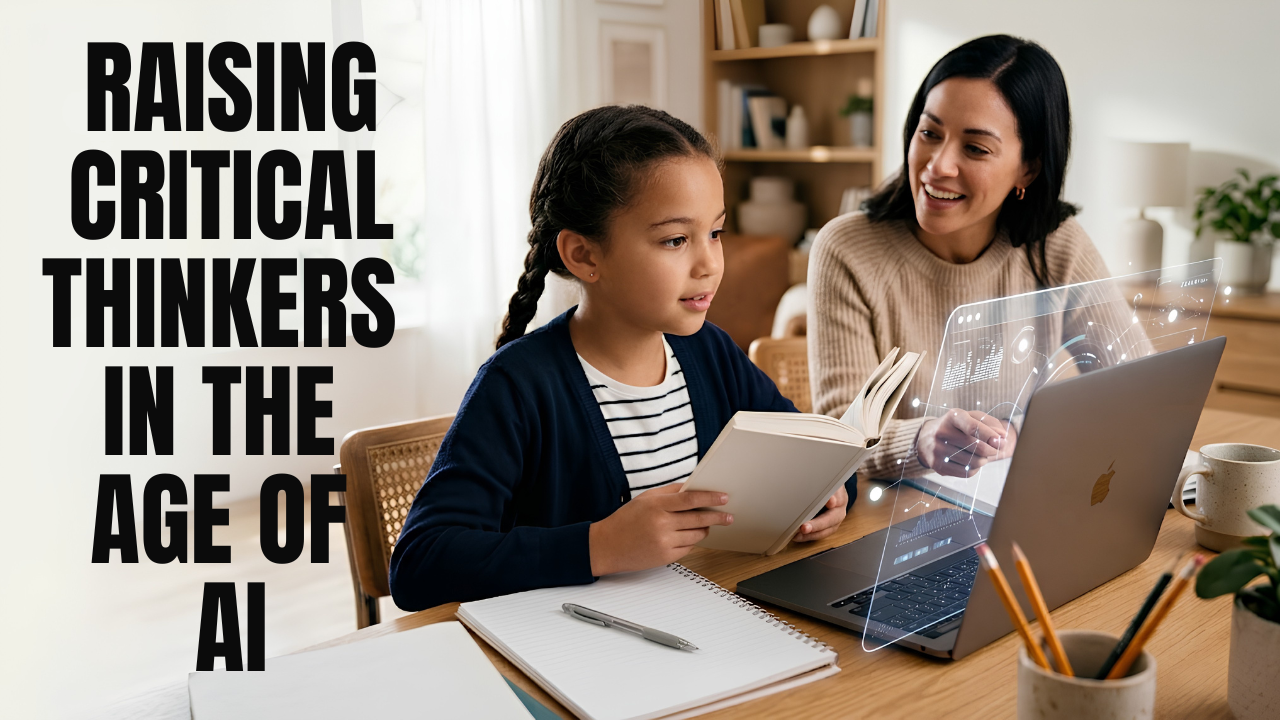
How Can Parents Help Children Think Critically in the Age of AI?
Children are growing up in a world where answers are always within reach.
A question about homework, a new idea they want to explore, or something they are simply curious about can now lead straight to AI. An answer can appear in seconds, often with an explanation that sounds clear and convincing.
For parents, this creates a new part of the digital world to navigate.
The bigger opportunity is helping children learn how to use AI wisely while continuing to develop something even more valuable: their ability to think for themselves.
Why Is Critical Thinking Becoming More Important?
Children have always been curious. They ask questions because they want to understand how things work, why something happens, or what something means.
AI makes satisfying that curiosity incredibly easy.
A child can ask almost anything and receive an explanation almost immediately. AI can support learning, spark new ideas, and introduce children to subjects they may never have explored before.
The important part comes after the answer.
Does the answer make sense? How does the child know it is accurate? Could there be another perspective?
Learning to pause, question information, and explore different possibilities helps children build stronger judgement as they grow.
How Can Parents Help Children Think About AI Answers?
Parents do not need to have every answer themselves.
Simple conversations can create powerful learning opportunities.
When a child shares something, they discovered through AI, parents can ask questions such as:
“What do you think about that?”
“How do you know that is true?”
“What else could explain this?”
These questions encourage children to engage with information rather than simply accept the first answer they receive.
Over time, this helps build confidence in their own thinking and decision-making.
What Skills Will Matter as AI Becomes More Capable?
Technology will continue to evolve, and children will grow alongside increasingly capable AI.
Curiosity, critical thinking, creativity, self-control, judgement, and human connection will continue to play an important role in helping children navigate that future.
These skills grow through real experiences: asking questions, having conversations, making mistakes, solving problems, playing, creating, and spending time with other people.
AI can provide information quickly. Human experiences help children learn what to do with that information.
How Can Families Create a Healthy Relationship With AI?
It can start with simple, everyday habits.
Talk about how AI is being used. Ask children what they are learning from it. Explore an answer together. Encourage them to check information and consider different perspectives.
At the same time, make room for reading, creativity, outdoor activities, family conversations and time away from screens.
The goal is to help children become capable users of technology while keeping their own thinking at the centre.
AI will continue to change.
The children growing up with it will shape what comes next.
Helping them learn how to think, question and make thoughtful decisions may be one of the most valuable skills parents can give them in an AI world.