
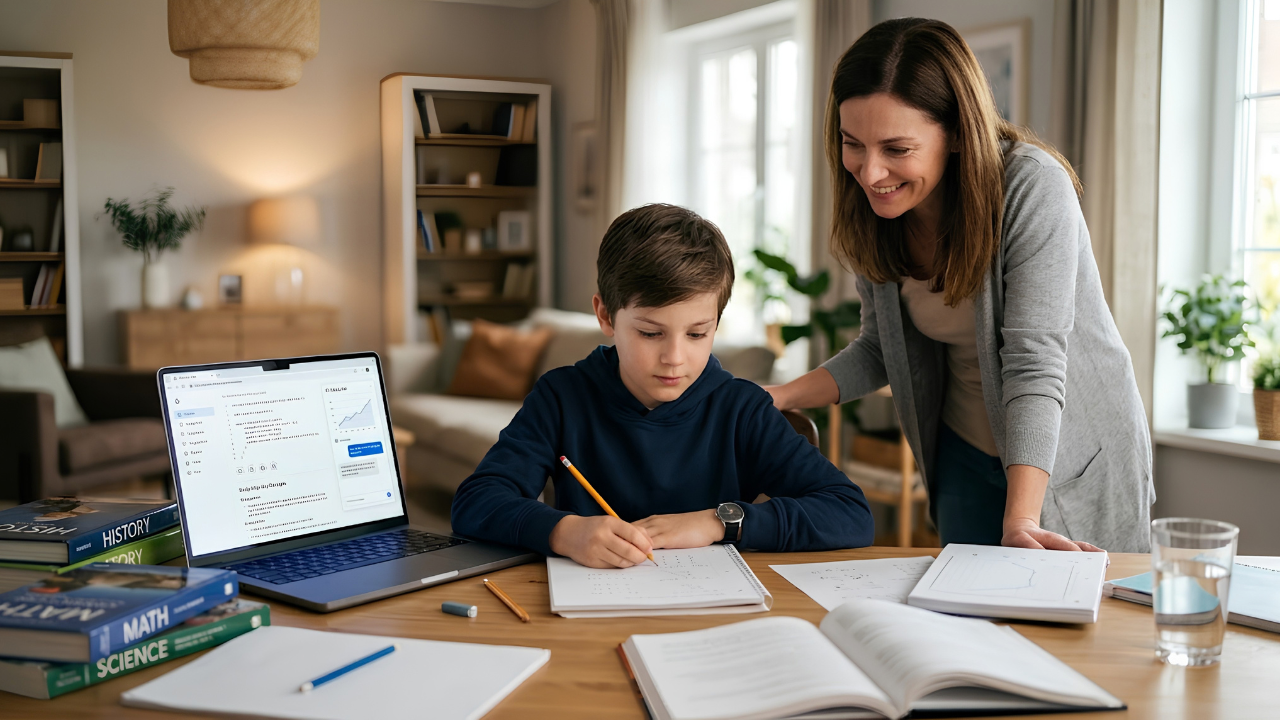
What Happens When AI Becomes Your Child’s Homework Helper?
AI is becoming part of the way children learn. They can use it to explain a difficult maths problem, organise ideas, summarise information, or prepare for a test.
Used thoughtfully, this kind of support can be helpful. The bigger question for parents is not simply whether their child is using AI, but how they are using it.
There is a big difference between using technology to support learning and using it to do the learning.
What Can AI Do to Help Children Learn?
AI can give children another way to understand something they are struggling with. They might ask for a simpler explanation, another example, or help understand where they went wrong.
The important part is that the child remains involved. They still need opportunities to think, question, solve problems, and make decisions for themselves.
Why Can AI Become a Problem?
The way a child uses AI matters.
Asking AI to explain a topic or help develop an idea is very different from asking it to write an entire assignment and submitting the response as their own work.
In one situation, AI is supporting the learning process. In the other hand, the child may complete the task without developing the skills the task was designed to build.
There is another issue parents need to consider. AI can produce an answer that sounds confident and convincing while still being incomplete or incorrect, so children need to learn to question information rather than automatically trust it.
How Can Parents Tell If AI Is Helping?
Parents don't need to be AI experts to have a useful conversation with their children.
Try asking:
- What did you ask AI to do?
- What did you learn from the answer?
- Did you check whether the information was correct?
- Could you explain the answer in your own words?
These questions can tell you much more than simply knowing that your child has used AI.
The same tool can be helpful in one situation and unhelpful in another. What matters is whether it is helping the child learn or making it easier for them to avoid thinking for themselves.
What Should Children Know About Using AI Safely?
Children also need to understand that using AI comes with responsibilities.
They should be careful about sharing personal information, photographs, or private details with AI tools. They should also learn to check important information against reliable sources, particularly when the information could affect their decisions or understanding of an important topic.
The goal isn't to make children afraid of AI. It is to help them understand what it can do, recognise its limitations, and develop good judgement around its use.
Should Parents Stop Their Children from Using AI?
I don't think the answer is simply to keep AI away from children.
Technology is already changing how children learn and interact with information, so helping them develop judgement to use it wisely is becoming increasingly important.
That can start with simple conversations at home. Ask your child what they are using AI for, what they find useful about it and when they think they still need to work things out for themselves.
At Digital Daze, this is part of a bigger conversation about children's relationships with technology. It isn't only about how much time they spend online, but how technology influences the way they learn, think, and make decisions.
What Can Parents Do Next?
Start with curiosity rather than criticism.
Ask your child to show you how they are using AI and talk about what they are learning from it. This gives you an opportunity to understand their habits while helping them develop better judgement around technology.
AI will continue to change the way children learn. The question isn't whether they will use it, but whether we are helping them learn how to use it wisely without losing the ability to think for themselves.