
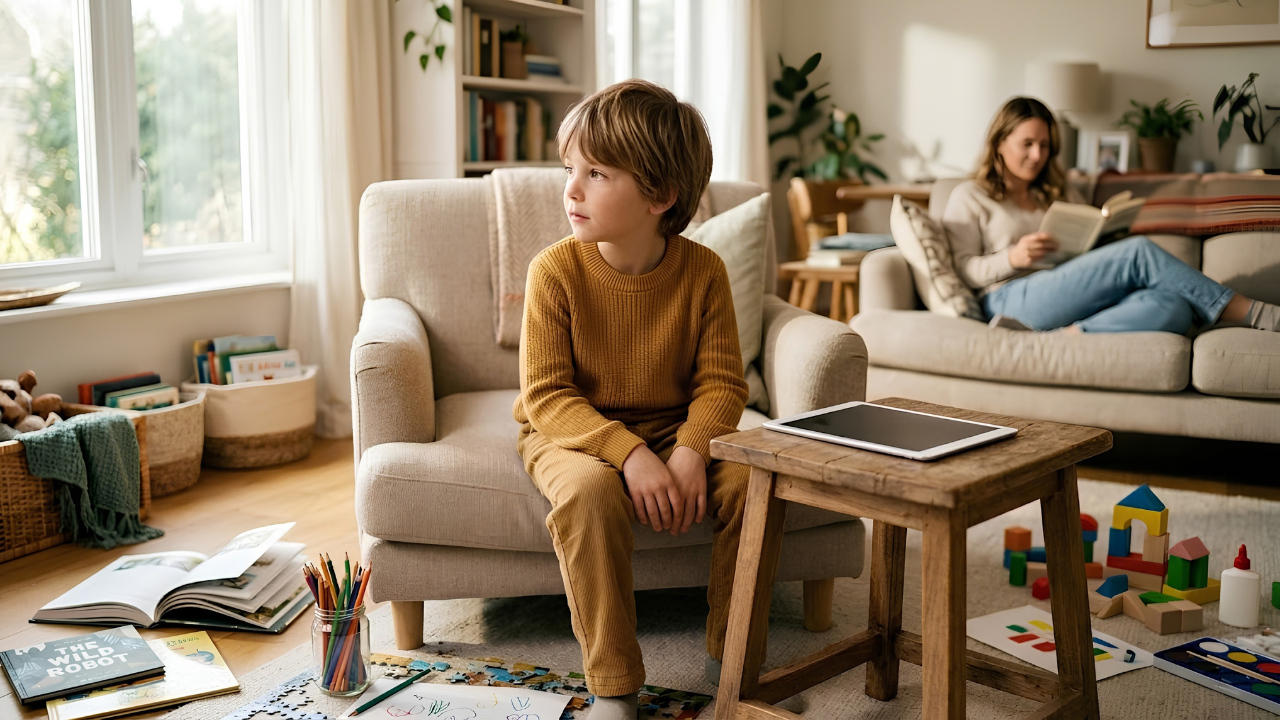
Why Is Boredom Important in a Digital World?
When children have nothing to do, our first instinct can be to find something for them.
A movie. A game. YouTube. Another activity to keep them occupied.
With technology always within reach, filling a quiet moment can happen almost without thinking.
But does every quiet moment need to be filled?
Sometimes, giving children space to experience boredom can give them an opportunity to think, explore their interests and decide what they want to do next.
What Happens When Children Have Nothing to Do?
Boredom can feel uncomfortable for children, especially when they are used to having entertainment readily available.
They might ask for a device, complain that there is nothing to do or look to a parent for the next activity. It can be tempting to solve the problem straight away.
But boredom can also create space for children to work out what interests them.
Unstructured play gives children opportunities to choose what they want to do and how they want to do it. This can allow them to explore their own ideas, use their imagination, and practise making decisions for themselves.
Sometimes, what looks like “nothing to do” is actually an opportunity for a child to discover something they enjoy.
Why Can Boredom Be Good for Children?
Boredom does not automatically make every child more creative, and it does not mean every child will respond to it in the same way.
What matters is having opportunities to move beyond constant entertainment and find something to do independently.
A child might draw, build something, make up a game, read, play outside or explore what is around them.
These experiences can give children opportunities to use creative thinking, imagination, and problem-solving skills. Raising Children Network also highlights the value of children working through boredom rather than being entertained every time they have nothing to do.
The goal is not to keep children bored.
It is to recognise that they do not need every moment planned, structured, or filled with entertainment.
How Does Technology Change the Way Children Experience Boredom?
Technology has made entertainment incredibly accessible.
When a child feels bored, reaching for a device can become an easy response because there is always something available to watch, play, or explore.
That does not mean technology is bad.
Children can use digital technology to learn, create, communicate, and explore. Digital experiences can have a place in family life alongside physical activity, imaginative play, reading, social connection, and time away from screens.
The bigger question is whether children have enough variety in how they spend their time.
If every quiet moment is filled with a screen, children may have fewer opportunities to decide for themselves what they would like to do.
That is why the conversation around children's technology use can be about more than simply asking, “How much screen time is allowed?”
It can also be about asking what children are doing, what they enjoy, what they are learning, and whether there is enough room for offline experiences.
What Can Parents Do When Their Child Says They Are Bored?
You do not always need to solve boredom for your child.
Instead of immediately offering a screen or organising an activity, give them some space to think.
You could ask:
- What could you make?
- What would you like to try?
- Is there something you have not done for a while?
- Would you like to play outside?
- Is there something we could do together?
You can also keep a few simple options available, such as books, drawing materials, puzzles, craft supplies or things children can build with.
The aim is not to become your child's entertainment manager.
It is to help them become more comfortable making choices about how they spend their time.
How Can Families Create More Space for Boredom?
You do not need to completely remove technology from your family's routine to create more space for boredom.
Start with small moments.
Perhaps there is some device-free time after school. Maybe the family spends part of the weekend outside, plays a board game, cooks together, or simply allows children to decide what they want to do.
It is also worth looking at our own relationship with technology.
Children notice what the adults around them are doing. When parents create moments to put their own devices aside, it can make family connections and time away from screens feel like a normal part of everyday life.
The goal is balance, not perfection.
What Could a Healthier Digital Balance Look Like?
Every family is different, so there is no single routine that will work for every child.
A healthier approach can involve making room for technology while also protecting time for relationships, play, creativity, movement, and rest.
At Digital Daze, the focus is not about treating technology as the enemy. It is about helping families think more carefully about how technology fits into everyday life and how they can create more opportunities for connection.
If you are wondering what your family's current relationship with technology looks like, the Digital Daze Quiz is a simple place to start.
You can also explore the Digital Daze book, which provides practical ideas for parents navigating technology while creating more opportunities for family connection.