
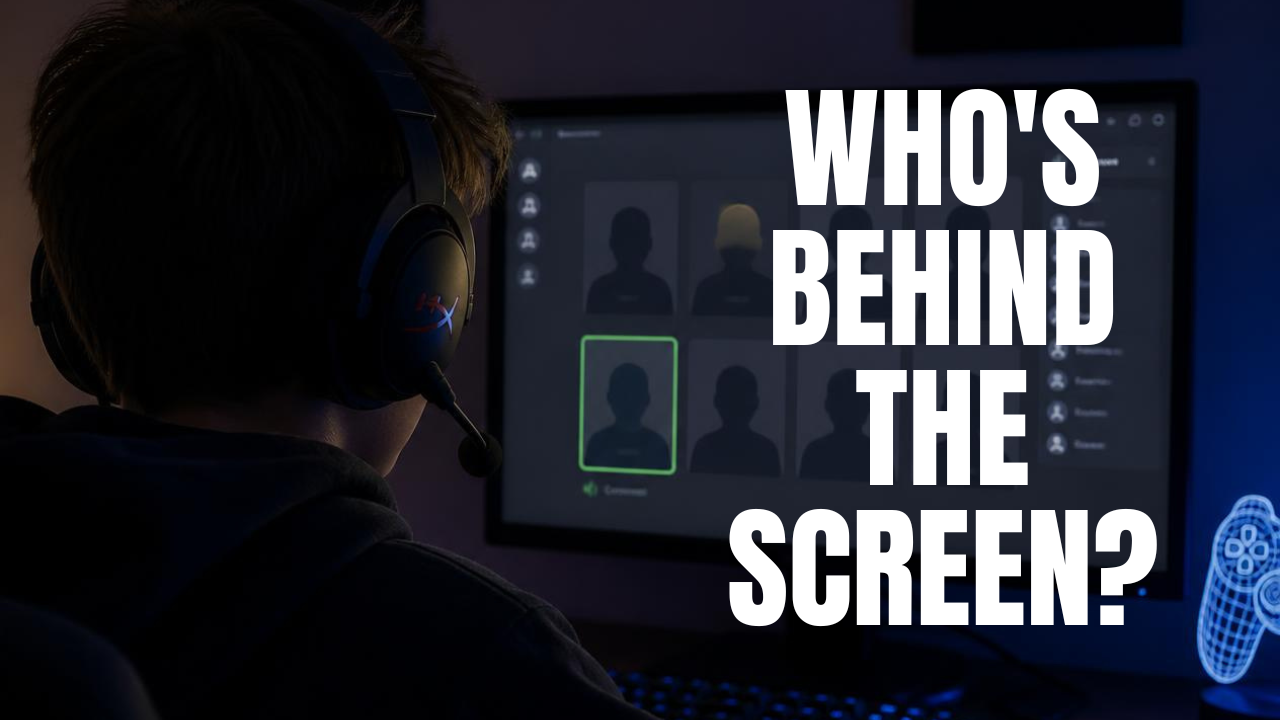
Who's Really on the Other Side of the Headset?
You walk past the bedroom and hear your child laughing, chatting, and carrying on a full conversation. Most parents naturally assume they're talking to a friend from school. Sometimes they are. Sometimes they're talking to someone they've never met, someone in another suburb, another state, or even another country.
That reality often surprises parents because it doesn't look concerning from the outside. It looks like a child enjoying a game. Yet gaming has changed significantly over the years, and many parents are still viewing it through the lens of what gaming looked like when they were growing up.
Has Gaming Become More Than Just Entertainment?
For many children, gaming is no longer just about playing a game. It has become one of the places where they socialise, spend time with friends, and connect with people who share similar interests.
Voice chat, team-based games, live streams, and online communities have transformed gaming into one of the largest social environments young people participate in today. In some cases, children may spend as much time interacting with people online as they do with friends at school.
That does not automatically make it a problem. Many online interactions are positive. Children build friendships, learn teamwork, solve problems together, and enjoy being part of a community. The important point is simply recognising that gaming is no longer a solitary activity. It is often a social one.
What Part of Online Gaming Do Parents Rarely See?
What makes online gaming different is that much of the interaction happens through a headset. As parents, we naturally pay attention to who our children spend time within the physical world. We know their friends, we meet other parents, and we generally have a sense of the people influencing them.
Online, those same reference points often disappear. A child might be playing with a classmate one evening and someone they've never met next. From the outside, both conversations can sound exactly the same.
Most of the time, those interactions are harmless. The challenge is that parents often have very little visibility into who is part of those conversations. Without asking questions or showing interest in their online world, it can be difficult to understand who children are interacting with and what those interactions involve.
Why Is This Different from Traditional Screen Time Concerns?
For years, discussions about technology have focused on screen time. How many hours are they spending online? How often do they use devices?
Those questions still matter, but they are no longer the only questions worth asking.
A child can sit safely at home while participating in conversations with people from all over the world. Technology may be happening on a screen, but the experience is often social.
Rather than focusing only on how long children are online, it can be just as valuable to understand who they are interacting with and what those interactions look like.
How Can Parents Start the Conversation?
One of the simplest things parents can do is to stay curious. Not suspicious. Not intrusive. Just genuinely interested in their child's online world.
Simple questions such as "Who do you usually play with?", "How did you meet them?" or "What do you enjoy about that game?" can often reveal far more than a screen time report ever will.
These conversations are not about monitoring every interaction. They are about creating an environment where children feel comfortable talking about their experiences online, including the moments that make them feel uncomfortable or unsure.
What Can Parents Do with This Awareness?
Technology continues to evolve, and the way children connect with others is evolving with it.
Gaming is no longer just entertainment. For many young people, it is also friendship, community, competition, and conversation. The more we understand that reality, the better equipped we are to guide our children through it.
Because sometimes the most important question is not how long they are playing.
It is who they are talking to.