
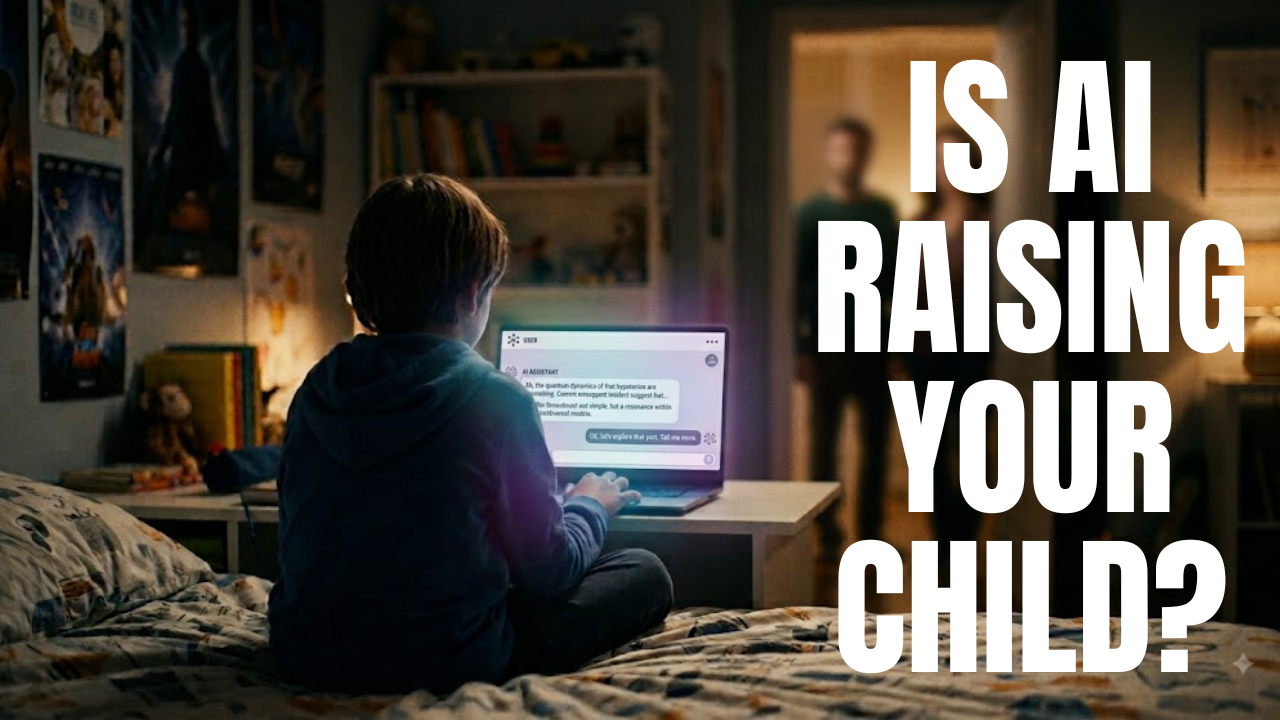
Is AI Becoming Your Child's Best Friend?
Artificial Intelligence has quickly become part of children's everyday lives. What started as a tool for homework and research is now being used to answer questions, explore ideas, solve problems, and, increasingly, have conversations.
For parents, this creates a new question about technology. It is no longer just about how much time children spend online, but also about what they are doing and who they are turning to when they need answers.
What Is Changing About the Way Children Use AI?
For many families, AI first appeared to be a useful learning tool. Children could ask it to explain a difficult subject, help with a school project, or explore something they were curious about. Used wisely, it can make learning more accessible and encourage children to ask questions.
But AI is moving beyond homework. Children can now use it for advice, ideas, reassurance, and conversations about everyday situations. As this becomes more common, parents may not always realise how significant a role AI is beginning to play in their child's life.
Why Are Children Drawn to AI?
The appeal is easy to understand. AI is available almost anytime and responds within seconds. A child does not have to wait for a parent to finish working, a teacher to become available, or a friend to respond to a message.
For a child dealing with school pressure, friendship problems, or the uncertainty that comes with growing up, having something that responds immediately can feel reassuring.
The issue is not that children are using AI. The important question is why they are using it and what role it is beginning to play.
When Does AI Become More Than a Tool?
AI can be an excellent resource for learning, creativity, and problem-solving. However, there is a difference between asking AI to explain a maths problem and asking it what to do about a friendship or personal challenge.
A chatbot can provide information, but it does not know a child in the way a parent, grandparent, teacher, coach, or trusted mentor does. Human relationships are built through shared experiences, understanding, trust, and genuine care.
Children need more than answers. They need people who can help them make sense of difficult situations and learn from their experiences.
Who Does Your Child Turn to When They Need Help?
For years, parents have focused on screen time. While that remains important, another question may be just as valuable:
Who does your child turn to when they need advice, support, or reassurance?
That question can tell parents much more than the number of hours a child spends online.
Children who feel comfortable talking to trusted adults are more likely to seek guidance when they face difficult situations. That is why keeping the conversation open matters, especially as AI becomes a bigger part of their world.
How Can Parents Help Children Use AI Wisely?
The answer does not have to be banned from AI. It is likely to become part of children's education and future careers, so helping them develop healthy habits around it is more valuable.
Parents can start by asking how their children are using AI, what they find helpful, and whether they understand that AI can sometimes provide information that needs to be questioned or checked.
Most importantly, keep creating opportunities for real conversations at home.
AI can support learning and provide information, but it should never replace relationships that help children feel understood, supported, and connected.
What Can AI Never Replace?
Technology will continue to become more advanced, but children will still need the same things they have always needed: guidance, encouragement, trust, and meaningful relationships.
A parent who listens, a grandparent who shares wisdom, a teacher who believes in them, or a mentor who helps them through a difficult moment provides something no algorithm can truly replace.
The goal is not to keep children away from AI. It is to help them use it wisely while making sure human connection remains at the centre of their lives.