
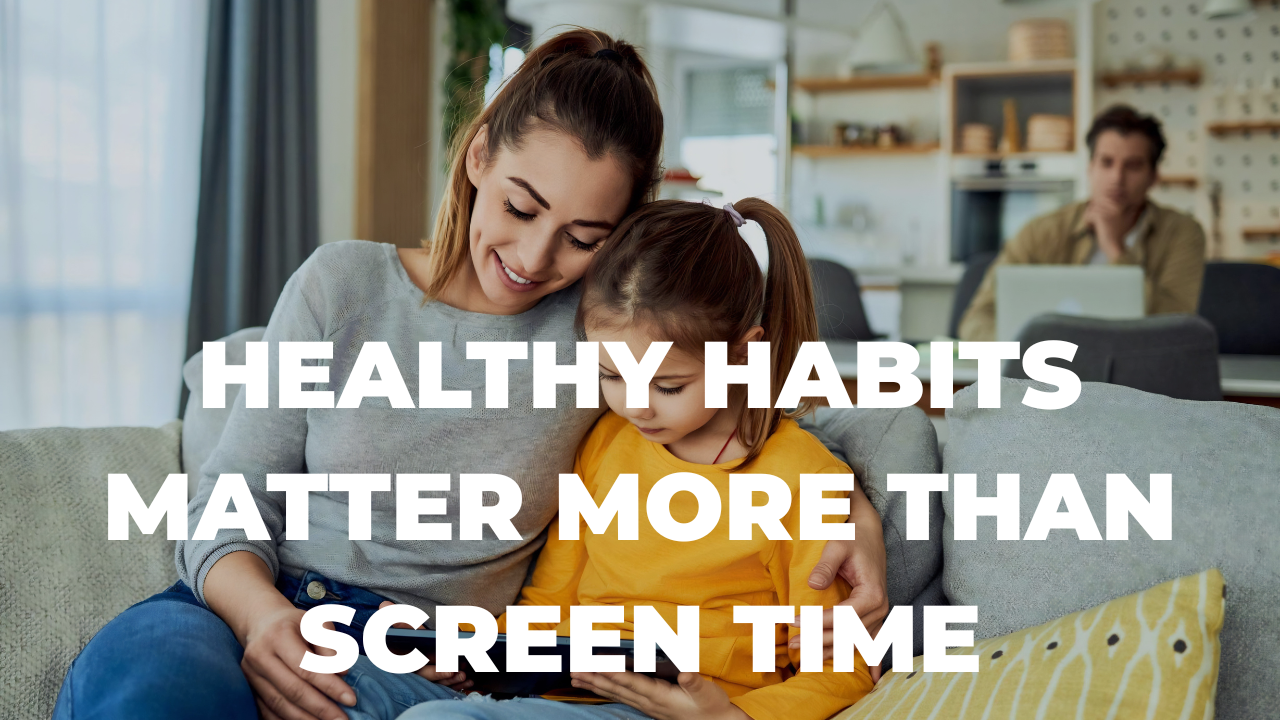
Why Healthy Digital Habits Matter More Than Screen Time Limits for Children
Why Healthy Digital Habits Matter More Than Screen Time Limits for Children
For many parents, one question comes up repeatedly. How much screen time is too much? It's an understandable concern; screens are everywhere, and families are constantly trying to find the right balance between the benefits of technology and the risks of overuse.
But there's a problem with focusing solely on-screen time. Two children can spend exactly the same amount of time on a device and walk away with completely different outcomes. One might be learning, creating, solving problems, or connecting with others. Another might be scrolling aimlessly, becoming distracted, disengaged, and increasingly dependent on digital stimulation. The difference isn't simply the number of hours spent on a screen. It's a habit that shapes how technology is used. Screen time measures quantity. Digital habits determine quality.
Why is focusing only on-screen time limits a flawed approach?
When concerns about technology come up, the first response is usually to reduce screen time, set limits, or introduce restrictions. These approaches can help, but they often target visible behaviour rather than the habit underneath it. A child whose screen time is restricted may end up spending more energy counting the minutes until access returns than actually learning to self-regulate. In some cases, removing the device addresses the symptoms without touching the behaviour driving it in the first place.
The issue was never really the screen. It's the relationship that develops with it. Technology tends to amplify existing behaviours, and when use becomes automatic rather than intentional, attention gets consumed without much thought given to purpose, value, or outcome. This is why lasting change rarely comes from restriction alone. It comes from helping children build healthier habits around how technology fits into their daily lives.
What does it actually look like to build healthy digital habits instead?
Healthy digital habits help children become more aware of when, why, and how they use technology. Rather than focusing purely on the amount of time spent online, it's often more useful to ask whether technology is helping them learn something new, supporting creativity and problem solving, helping them connect with others in a positive way, or simply filling time and consuming attention without much purpose behind it. These questions tend to reveal more than any screen time report ever could.
A handful of small, consistent habits tend to make the biggest difference over time. Creating technology free moments each day, particularly during meals, family conversations, and before bedtime, opens up space for genuine connection and reflection. Turning off non-essential notifications reduces the constant pull to check a device and helps children become less reactive and more focused. Encouraging purposeful use, simply pausing to think about what they intend to do before opening an app, can reduce a lot of mindless scrolling. Protecting the first and last hour of the day matters too, since how a child starts and finishes their day has a real influence on focus, mood, and overall wellbeing. And building in regular digital breaks helps reduce mental fatigue and creates room for movement, hobbies, conversation, and rest.
When children develop these kinds of intentional habits, they're better positioned to maintain focus, build healthier routines, strengthen relationships, and find balance between their online and offline worlds. The goal was never to eliminate technology. It's to make sure technology serves their development rather than controlling their attention.
What's the most important thing for parents to understand about building these habits?
One of the biggest mistakes parents make is assuming that rules alone create healthy habits. They don't. Rules without explanation tend to create workarounds rather than genuine understanding. Children are far more likely to develop healthy digital behaviours when they understand why those behaviours matter, rather than simply being told what they can and can't do.
Rather than focusing exclusively on restrictions, it helps to focus on conversation instead, talking openly about attention, balance, responsibility, and the role technology play in everyday life. Most importantly, modelling the behaviours you want to see carries more weight than any rule could. Children learn far more from what parents do than from what they say, and the habits demonstrated at home often become the habits children adopt for themselves.
Technology isn't going away, nor should it. The real question was never whether children will use technology, it's whether they'll learn to use it intentionally. Healthy digital habits aren't about treating technology as an enemy. They're about helping children build a relationship with it that supports learning, wellbeing, creativity, and meaningful connection, rather than letting it dictate their attention and behaviour.
Screen time has value as a measurement, but it rarely tells the full story. What matters most is how technology is being used, why it's being used, and whether those habits genuinely support healthy development. The goal was never to use technology less. The goal is to use it better.